Most Indian homes do not need an introduction to tulsi. It grows in a pot by the door, gets watered before anyone has had breakfast, and appears in grandmother’s kadha the moment someone sneezes twice. What is newer is the world catching up: holy basil now shows up in wellness journals, adaptogen round-ups and premium tea menus from London to Los Angeles. Somewhere between the courtyard plant and the global superfood headlines sits a simple, honest question — what does tulsi tea actually do for you, and how should you drink it? This guide walks through the tradition, the emerging science, the taste (better than you might expect), and how to make tulsi a daily habit you genuinely look forward to.
Tulsi in Ayurveda: The Queen of Herbs
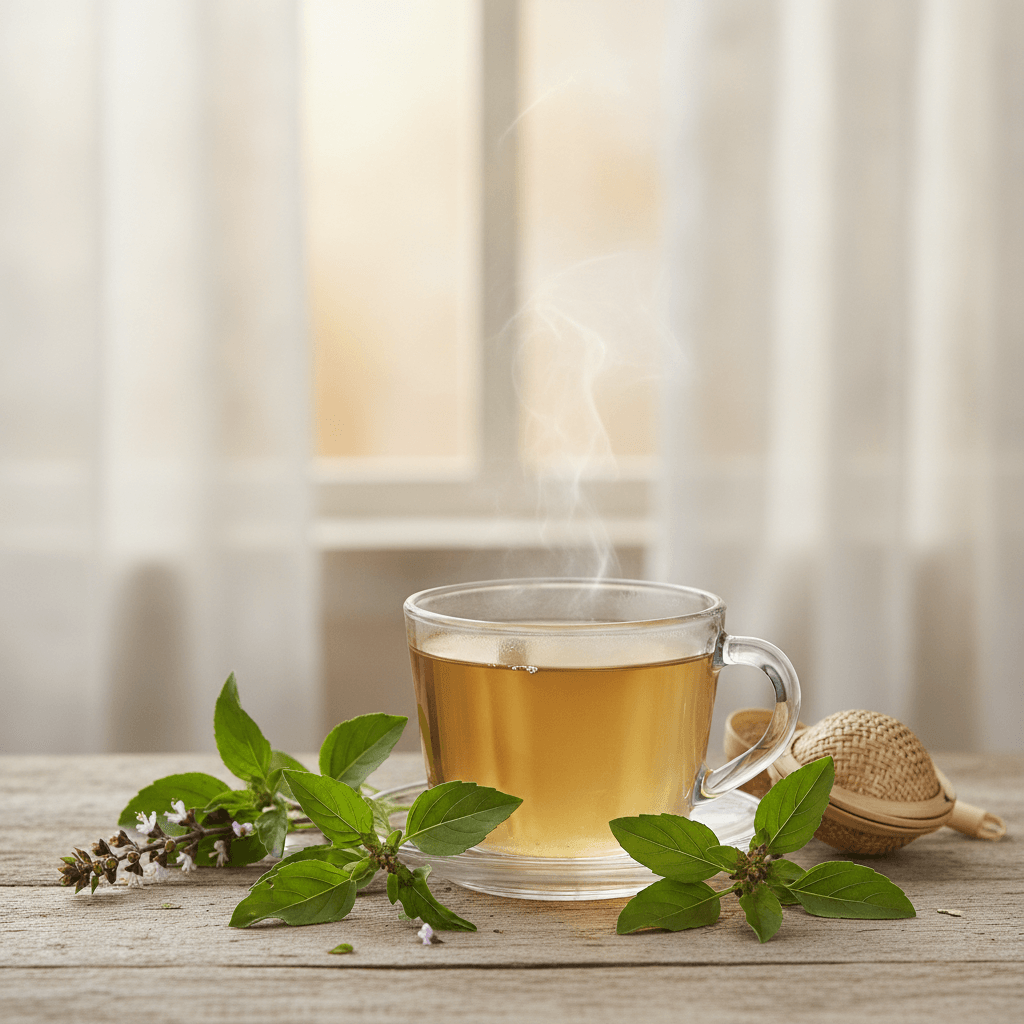
In Ayurvedic texts, tulsi (Ocimum sanctum, or holy basil) is called “The Incomparable One” and the “Queen of Herbs” — an elixir prescribed for everything from clarity of mind to longevity, mentioned in foundational works like the Charaka Samhita over two thousand years ago.
Three main varieties are used in teas. Rama tulsi has green leaves and a mellow, clove-like flavour; Krishna tulsi carries purple-tinged leaves with a sharper, peppery bite; and Vana tulsi, the wild forest variety, is brighter and more lemony.
The traditional framing matters: Ayurveda never positioned tulsi as a medicine you take when ill, but as a rasayana — a daily tonic taken consistently to support overall balance. That “small amounts, every day” philosophy is exactly how tulsi tea is best enjoyed.
Tulsi as an Adaptogen: The Stress Connection
The word you will see attached to tulsi everywhere is “adaptogen” — a class of herbs traditionally believed to help the body adapt to physical and mental stress rather than targeting one symptom. Ashwagandha and ginseng are the famous names in this club; tulsi is India’s homegrown member.
What does the research say? Honestly: it is promising but early. Small human trials have explored tulsi’s effects on perceived stress, and reviews of the evidence describe encouraging results while consistently calling for larger, better-designed studies. So the fair statement is this: tulsi has centuries of traditional use for calm and clarity, and modern science is interested but not yet conclusive.
What we can say with confidence is about the ritual itself. Stepping away from the laptop, brewing a fragrant cup, and drinking it slowly is a genuine pause in a wired day — and unlike your third coffee, a tulsi green tea gives you gentle focus without the jitter spiral.
The Immunity Tradition
Ask any Indian parent why tulsi goes into kadha, and the answer is immediate: seasonal protection. Tulsi has been traditionally used for generations to support the body’s natural defences during weather changes — the monsoon sniffle season and winter chills. The leaves contain aromatic compounds such as eugenol (also found in clove), along with antioxidants that help the body manage oxidative stress.
To keep the framing honest: no cup of anything prevents illness, and tulsi tea is no substitute for sleep, good food or handwashing. But as a daily ritual with deep traditional roots and an emerging research base, it may support your body’s resilience. Pairing it with ginger, another staple traditionally valued for warmth and digestion, is the classic combination.
What Does Tulsi Tea Taste Like?
If you are picturing bitter herbal medicine, relax. Tulsi brews into a surprisingly pleasant cup: herbaceous and gently peppery, with notes of clove, a whisper of mint, and a clean, slightly sweet finish.
On its own, tulsi makes a light caffeine-free tisane. Blended with green tea, it gains body and a fresh vegetal backbone; add ginger and the cup turns warming and invigorating — the style TeaQure has built its blend around. It takes honey beautifully, plays well with lemon, and stays forgiving even if you steep a minute too long.
When to Drink Tulsi Tea
- Morning: a tulsi green tea blend gives you mild caffeine from the green tea plus tulsi’s clarity — a calmer start than strong coffee.
- Mid-afternoon: the classic slump slot. A cup at 3 or 4 pm refreshes without wrecking your sleep the way a late coffee can.
- After heavy meals: tulsi-ginger combinations are traditionally taken to support comfortable digestion.
- During seasonal changes: monsoon onset and winter’s first chill are when Indian households have always leaned hardest on tulsi.
If you are drinking a pure tulsi tisane with no tea base, evenings are fine too. With a green tea blend, keep the last cup before 6 pm if you are caffeine-sensitive.
How TeaQure Blends It — and How to Brew It Right
TeaQure’s Tulsi Ginger Green Tea combines whole tulsi leaves with real dried ginger pieces on a base of Himalayan green tea — no flavourings doing the heavy lifting. The green tea brings gentle caffeine and catechin antioxidants, tulsi its adaptogenic tradition, and ginger ties the cup together with warmth.
- Use 1 teaspoon of leaves (or 1 tea bag) per 200 ml cup.
- Heat water to 80 to 85°C — let boiled water sit for 60 to 90 seconds before pouring. Boiling water scalds green tea and turns it bitter.
- Steep for 2 to 3 minutes, covered.
- Add honey or lemon after brewing if you like; good leaves are re-steepable, so use them for a second, slightly longer infusion.
Three cups a day is a comfortable rhythm for most people — remember the rasayana principle: consistency over quantity.
Frequently Asked Questions
Can I drink tulsi tea every day?
Yes — daily, consistent use is exactly how Ayurveda traditionally recommends tulsi, as a gentle everyday tonic rather than an occasional remedy. One to three cups a day suits most healthy adults. If you are pregnant, trying to conceive, or on medication such as blood thinners, check with your doctor before making it a daily habit.
Does tulsi tea have caffeine?
Pure tulsi tisane is naturally caffeine-free. However, blends like tulsi ginger green tea contain green tea leaves, which carry mild caffeine — roughly a third to half of a cup of coffee. If caffeine bothers you, enjoy blended versions earlier in the day and keep evenings for pure herbal tisanes.
Is tulsi tea good for stress?
Tulsi is classed as an adaptogen and has been traditionally used for centuries to support calm and mental clarity. Early human studies on stress are encouraging, though researchers agree larger trials are needed. Combined with the genuinely calming ritual of a slow cup, many drinkers find it a helpful part of their unwinding routine.
What is the best time to drink tulsi green tea?
Morning and mid-afternoon are ideal. The gentle caffeine from the green tea base offers focus without coffee’s spike and crash, while tulsi and ginger add warmth. Avoid it right before bed if you are caffeine-sensitive, and enjoy it after meals if you like its traditional digestive association.
Bring the Queen of Herbs Home
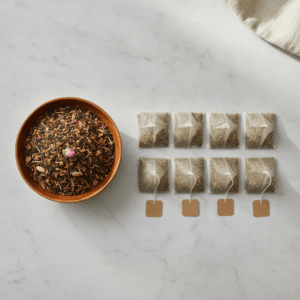
Your grandmother had the right idea; TeaQure just made it more convenient. For loose-leaf loyalists who love the ritual, our Tulsi Ginger Green Tea delivers whole leaves, real ginger and Himalayan greens in every spoonful. For desk drawers and travel bags, the Tulsi Ginger Green Tea 25N Tea Bags brew the same cup in three flat minutes. Orders above ₹499 ship free across India — a small step towards a steadier, more fragrant daily pause.
Disclaimer: TeaQure teas support wellness rituals; they don’t diagnose, treat, or cure disease. Consult your doctor for medical concerns.