Two chais define India, and they could not be more different in temperament. One is a maximalist — perfumed with cardamom, warmed with ginger, layered with clove and cinnamon, simmered patiently like a Sunday curry. The other is a minimalist street poet — dark, strong, sweet, served in half a glass at a roadside tapri as Mumbai’s local trains thunder past. The two are often lumped together as “Indian tea,” but asking which is better is like choosing between home-cooked biryani and vada pav eaten in the rain. The honest answer is both, at different hours, in different moods. This is a love letter to both — their histories, their differences, and how to brew each properly at home.
Where Masala Chai Comes From: Spices Before Tea
Here’s the twist most people miss: the masala came first, the chai came later. India has simmered warming spice decoctions for thousands of years — cardamom, ginger, pepper, cinnamon and clove were the currency of the ancient spice routes, sipped as kadha long before tea leaves entered the picture.
Tea only became an Indian staple in the early twentieth century, when the British-era Indian Tea Association aggressively promoted Assam tea to Indians. Vendors, ever practical, stretched expensive tea leaves with milk, sugar and the spice blends they already loved. The Tea Association objected — spices masked the tea and cut sales — but drinkers had decided. The marriage stuck, and every family now guards its own ratio: more ginger in the monsoon, extra cardamom for guests, a scandalous pinch of pepper for a scratchy throat.
Where Cutting Chai Comes From: Mumbai’s Tapri Culture
Cutting chai is younger, faster and unmistakably Mumbai. The name comes from “cutting” — one full glass split (“cut”) into two half-glass servings. At the city’s tapris (roadside tea stalls), a full glass cost more money and time than a mill worker or taxi driver could spare; half a glass of very strong, very sweet tea delivered the hit at half the price, in the ninety seconds you actually had.
Irani cafés and street vendors perfected the format through the mid-1900s, and it became social glue: “chalo, cutting maarte hain” is Mumbai’s version of “let’s grab a coffee.” The tea is boiled aggressively with milk and sugar until deep terracotta brown, often with just ginger, then strained theatrically from height into small glass tumblers. It isn’t delicate. It isn’t meant to be. It’s fuel, punctuation, and friendship in a hundred millilitres.
What Actually Makes Them Different
Both are strong, milky, sweet black teas — so where exactly do they part ways?
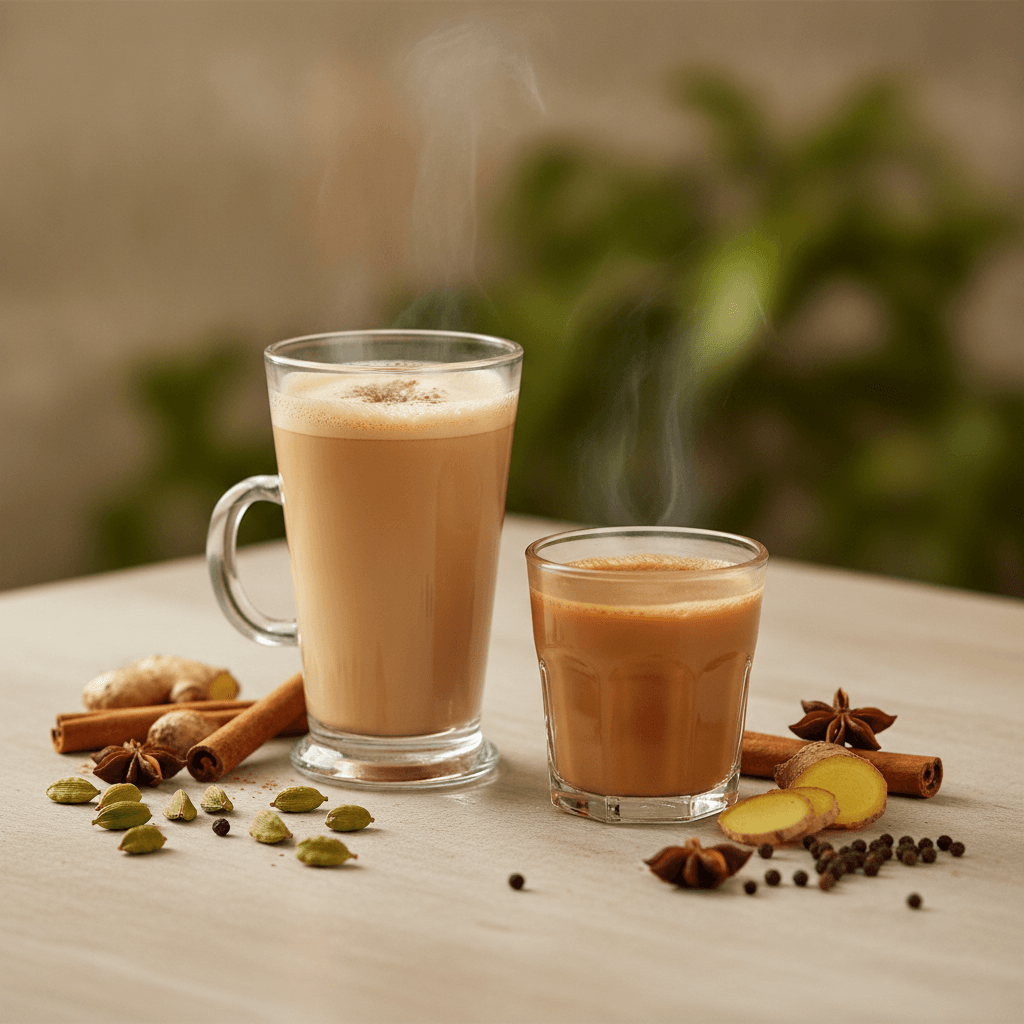
- Spice load. Masala chai is defined by its spices — a serious blend carries anywhere from four to twenty spices and herbs. Cutting chai keeps spicing minimal, often just crushed ginger, because the tea itself is the star.
- Strength and brew style. Cutting chai uses more strong, small-leaf CTC tea and is boiled hard, giving it a bracing, almost bitter backbone balanced by generous sugar. Masala chai simmers more gently so the spices infuse without harshness.
- Milk ratio. Masala chai is creamier, often half milk or more. Cutting chai leans toward more water — rich enough to be smooth, light enough to gulp.
- Serving style. Masala chai belongs in a proper cup at home, sipped slowly. Cutting chai belongs in a half-filled glass tumbler, drunk fast and standing up, ideally with bun maska and a cricket debate.
- Sweetness. Both are sweet, but cutting chai is unapologetically sweeter — sugar is part of its engineering.
The Authentic Recipes
Homestyle Masala Chai (serves 2)
You’ll need: 1 cup water, 1 cup full-cream milk, 2 heaped teaspoons of a good masala chai blend such as TeaQure’s Masala Chai with 20 spices and herbs, half an inch of crushed fresh ginger, 2 bruised green cardamom pods (optional if your blend is spice-rich), and 2–3 teaspoons sugar or jaggery.
Boil the water with the ginger and cardamom for a full minute so the spices open up. Add the tea blend and simmer on medium for 2 minutes until deep amber. Pour in the milk, return to a gentle boil, then simmer 2–3 minutes more, letting it rise and settle once or twice — that’s where the body comes from. Stir in sugar, strain, and rest thirty seconds before sipping. Monsoon variation: double the ginger and add a leaf of tulsi.
Mumbai-Style Cutting Chai (serves 4 cuttings, i.e., 2 full glasses)
You’ll need: 1.5 cups water, three-quarter cup full-cream milk, 3 teaspoons strong CTC-style tea such as TeaQure’s Bombay Cutting Chai, 1 inch smashed fresh ginger, and 3–4 teaspoons sugar (don’t be shy — that’s the authentic ratio).
Boil the water with the ginger and sugar together — tapri-style, sugar goes in early. Add the tea and boil hard, uncovered, for 3–4 minutes until deep reddish-brown and the kitchen smells like a Mumbai street corner. Add the milk and boil vigorously another 2 minutes, letting it climb the pan twice. Strain from a height into small glasses, filling each only halfway. Serve immediately, too hot to hold comfortably. That’s correct.
When to Drink Which
Masala chai is a morning and monsoon-evening tea — it rewards slowness, pairs beautifully with parathas and pakoras, and its warming spices are traditionally reached for in cold, rainy weather. Cutting chai is the 4 p.m. tea: the slump breaker, the post-commute reset, the one you make when friends drop by unannounced. The tapri rule — masala chai when you have time, cutting chai when you don’t, either when it’s raining.
Frequently Asked Questions
Is cutting chai just a smaller masala chai?
No. Cutting chai is brewed differently — more tea, harder boil, less milk, minimal spicing and more sugar — producing a sharper, punchier cup than masala chai’s rounded, spice-forward creaminess. The half-glass serving is a pricing and pace invention of Mumbai’s tapri culture, not just a smaller pour of the same drink.
Which tea leaves work best for each style?
Both styles need strong CTC-grade Assam tea rather than delicate whole leaves, because the leaves must stand up to milk and boiling. For masala chai, choose a pre-blended spiced tea or add your own whole spices; for cutting chai, use a robust blend built specifically for hard boiling.
Why does tapri chai taste different from homemade chai?
Three reasons: tapri vendors use a very high tea-to-water ratio, boil aggressively and repeatedly through the day, and sweeten generously. Straining from height also aerates the chai slightly. Replicate the hard boil, the early sugar and the small glass, and you’ll get remarkably close at home.
Does masala chai have more caffeine than cutting chai?
Usually the opposite. Cutting chai typically uses more tea per millilitre and a longer, harder boil, extracting more caffeine into a smaller serving. Masala chai’s larger milk share and gentler simmer generally mean moderate caffeine per cup, though exact numbers vary with your blend and brewing time.
Brew Both Sides of the Love Story
Why choose? Keep both tins on your shelf and let the hour decide. For slow mornings and rainy evenings, brew TeaQure’s Masala Chai with 20 spices and herbs on a strong Assam base. For that 4 p.m. tapri fix at home, reach for Bombay Cutting Chai, built for a proper Mumbai-style hard boil. Order both together and shipping’s free over ₹499. Chalo, cutting maarte hain.
Disclaimer: TeaQure teas support wellness rituals; they don’t diagnose, treat, or cure disease. Consult your doctor for medical concerns.