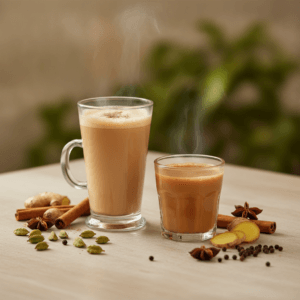
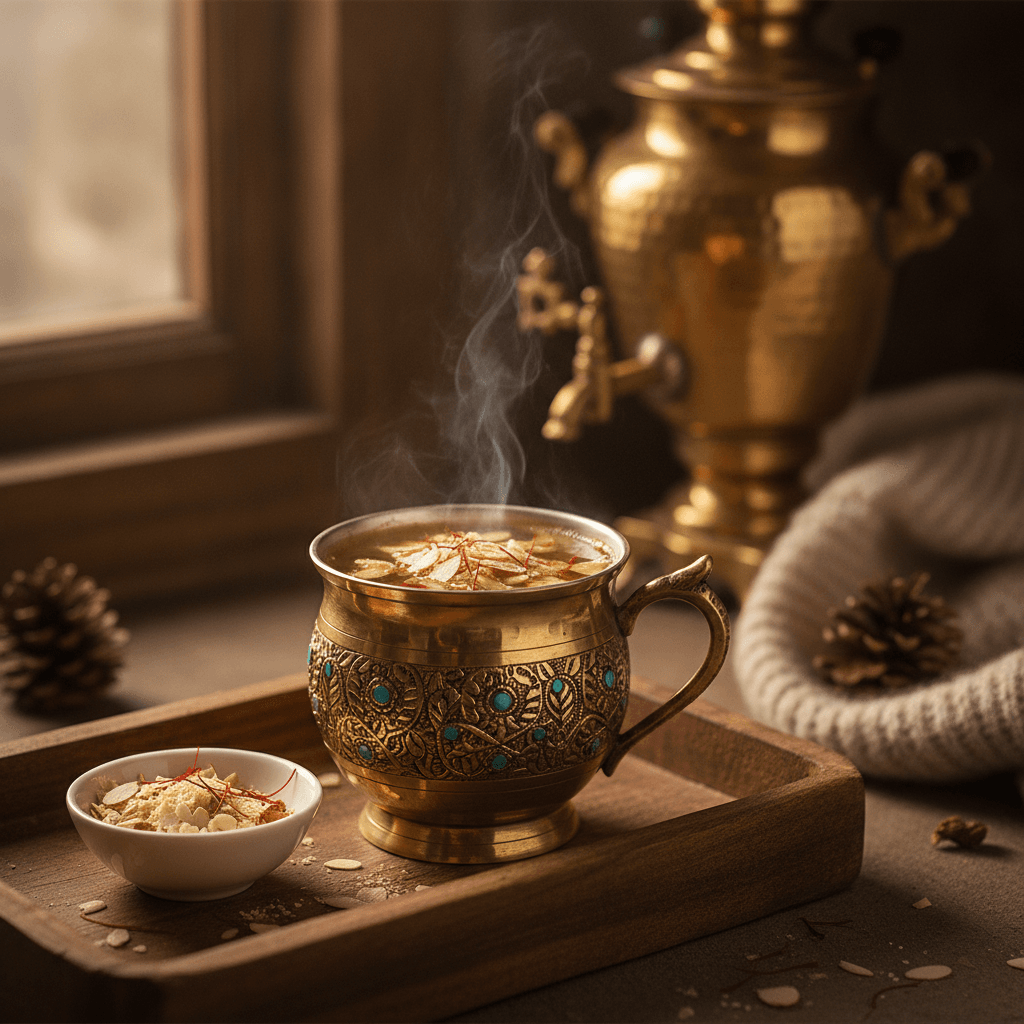
Some teas are drinks. Kashmiri kahwa is a memory of a place. One sip, saffron, cardamom, cinnamon, a whisper of green tea, slivered almonds settling in the cup, and you’re somewhere cold and beautiful, under a snow-dusted chinar tree. For centuries, this golden brew has been how Kashmir welcomes guests, warms winters, and ends heavy wazwan feasts. Yet most versions made outside the valley get it wrong: milk where there should be none, boiling water that bruises the green tea, saffron so scarce it’s a rumour. This guide covers the real thing: where kahwa comes from, what goes into it, why generations have sworn by it, and how to brew an authentic cup in a Mumbai or Bengaluru kitchen.
Where Kahwa Comes From: A Samovar Story
Kahwa’s story runs along the old trade routes that connected Kashmir with Central Asia, Persia, and China. Green tea likely arrived on these caravan roads, meeting the spices and saffron Kashmir grew or traded. Even the word “kahwa” is thought to share roots with the Arabic “qahwah”, a marker of how far this cup travelled.
The soul of traditional kahwa is the samovar, a brass or copper urn with a central chamber for live coals and a surrounding cavity for the brew. Water, green tea, saffron, and whole spices simmer gently around the fire chamber, staying warm through hours of conversation. In Kashmiri homes the samovar wasn’t just a kettle; it was the hearth of hospitality, with kahwa served in small cups called khos.
Saffron makes this tea unmistakably Kashmiri; Pampore, near Srinagar, grows some of the world’s most prized saffron, and a few strands turn the whole cup golden.
What Goes Into an Authentic Kahwa
The classic recipe is short; every ingredient earns its place.
- Green tea leaves. The base. Kahwa traditionally uses a mild green tea that stays soft after simmering.
- Saffron. A few strands for colour, aroma, and that faint honeyed bitterness. The signature.
- Green cardamom. Lightly crushed pods for a sweet, resinous lift.
- Cinnamon. A small piece of bark for gentle warmth and body.
- Almonds. Blanched and slivered, added to the cup, not the pot; they soften in the hot tea.
- Sweetener. Sugar or honey, kept light. Kahwa should taste of saffron, not syrup.
Some households add cloves or dried rose petals; wedding kahwa can be lavish with saffron. What never goes in is milk. There is a separate, salty, pink Kashmiri tea made with milk, noon chai, and people constantly mix them up. Kahwa is always brewed in water; milk dulls the saffron and the character of the drink.
Kashmiri Kahwa Benefits: What Tradition Says
Honest framing first: kahwa is a beloved traditional beverage, not a medicine, and we’ll keep it that way.
- Warmth in cold weather. Kahwa’s original job. In Kashmir’s harsh winters, a hot, spiced brew sipped through the day kept people comfortable; cinnamon and cardamom have long been considered warming spices in Indian home traditions.
- After-meal comfort. Kahwa is traditionally served after rich wazwan feasts, and its spices have been used for generations to support comfortable digestion after heavy food.
- A gentler caffeine ritual. Green tea carries less caffeine than coffee, so kahwa may suit those wanting a lighter, uplifting hot drink for slow mornings or 4 pm slumps.
- Antioxidant-rich ingredients. Green tea and saffron are naturally rich in antioxidant compounds; research on green tea catechins is promising but ongoing.
- A moment of pause. Not everything needs a lab study. Ten unhurried minutes with a fragrant cup may support the calm most of us are short on.
How to Make Authentic Kahwa at Home
No samovar required; a saucepan and ten minutes will do. Makes two cups.
- Warm 2 cups (about 400 ml) of water in a saucepan with 1 small piece of cinnamon and 2 lightly crushed green cardamom pods.
- Simmer gently, never a hard boil, for 3 to 4 minutes so the water takes on the spice aroma.
- Take the pan off the heat for a minute, to roughly 85 degrees Celsius. Add 2 teaspoons of Kashmiri kahwa blend and 4 to 5 strands of saffron.
- Cover and steep 2 to 3 minutes. Longer, and the green tea turns bitter; kahwa should be delicate, never harsh.
- Place a few slivered blanched almonds in each cup.
- Strain the kahwa over the almonds, sweeten lightly if you like, and serve hot.
Two rules above all: never add milk, and never let the green tea sit in furiously boiling water. Simmer the spices, treat the leaves gently.
The Five-Minute Shortcut
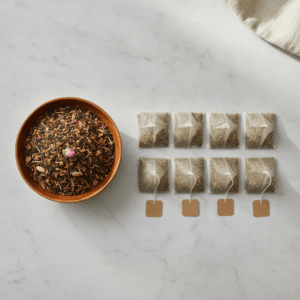
Office desk, hostel room, 6 am train? Use a good kahwa tea bag. Boil water, rest it 2 minutes, pour over the bag, steep 2 to 3 minutes, and remove. Our Royal Kashmiri Kahwa 25N Tea Bags carry the saffron and spices in the blend, a genuinely close cousin of the saucepan version with zero cleanup. Add a couple of almond slivers if you have them.
Small Details That Make a Big Difference
- Buy saffron from a trusted source; a little real saffron beats a lot of fake.
- Crush cardamom just before brewing; whole pods hold aroma far better than powder.
- Serve in small cups, sipped slowly and refilled often, samovar style.
- Brew a light second steep from the same leaves for a gentler evening cup.
Frequently Asked Questions
Is Kashmiri kahwa the same as green tea?
Kahwa is built on a green tea base but is a distinct preparation: green tea brewed gently with saffron, cinnamon, and cardamom, finished with almond slivers. Plain green tea tastes grassy and fresh; kahwa tastes golden, spiced, and aromatic. If you enjoy green tea but want more warmth and fragrance, kahwa is the natural next step.
Can I add milk to kahwa?
No, and this is the most common mistake outside Kashmir. Authentic kahwa is always brewed in water; milk muddies the saffron and clashes with the green tea. You may be thinking of noon chai, Kashmir’s separate pink, salted milk tea. For creaminess, the almonds in the cup provide gentle richness instead.
When is the best time to drink kahwa?
Traditionally, kahwa is sipped through cold mornings and after heavy meals. It works as a morning cup, a mid-afternoon lift, or an after-dinner ritual, though since green tea contains some caffeine, sensitive sleepers may want their last cup by early evening. There’s no wrong time; Kashmiris keep the samovar going all day.
Does kahwa help with weight loss?
We won’t make that claim. Kahwa is a light, milk-free beverage, so it can be a mindful swap for sugary or creamy drinks, and green tea is traditionally seen as a companion to active routines. But no tea melts weight on its own; think of kahwa as a pleasant part of balanced habits.
Bring the Valley to Your Kitchen
You don’t need a samovar or a Srinagar address, just good ingredients and ten quiet minutes. Our Kashmiri Kahwa is a loose blend with real saffron and whole spices for the full saucepan ritual, while the Royal Kashmiri Kahwa 25N Tea Bags make the shortcut cup honestly delicious. Free shipping over ₹499, snowfall sold separately.
Disclaimer: TeaQure teas support wellness rituals; they don’t diagnose, treat, or cure disease. Consult your doctor for medical concerns.