If your green tea tastes like boiled spinach with a side of regret, the tea is almost never the problem. The brewing is. Most of us learned to make tea the Indian way: water at a rolling boil, leaves in, walk away, come back when you remember. That works beautifully for masala chai. It ruins green tea; barely oxidised leaves are delicate and turn bitter fast when pushed. The good news: brewing it well needs no special equipment, just two numbers, water at 80 to 85 degrees Celsius and a steep of 2 to 3 minutes, and an understanding of why they matter. Let’s fix your cup.
Why Green Tea Turns Bitter in the First Place
Green tea contains tannins (mostly catechins), caffeine, and sweeter amino acids like L-theanine. All of these dissolve into your water when you steep, but not at the same speed. The pleasant, fresh, slightly sweet notes come out early and at moderate temperatures. Tannins and caffeine, the sources of bitterness and astringency, extract aggressively when the water is very hot or the leaves sit too long. Bitterness has two main culprits.
- Water that is too hot. At a full boil, water strips tannins out of the leaf far faster than at 80 degrees. You essentially scald the leaf.
- Oversteeping. Even at the right temperature, 5 or 6 minutes lets bitterness catch up with and overwhelm the sweetness.
A third, quieter culprit is quantity. Two heaped spoons of leaf “for strength” plus a long steep makes a harsh cup, not a strong one.
The Two Numbers That Matter: 80 to 85 Degrees, 2 to 3 Minutes
Memorise these two and you’ve solved 90 percent of green tea brewing.
Temperature: 80 to 85 degrees Celsius. No thermometer needed. Boil your water, switch off the flame, and let it sit uncovered for about 2 to 3 minutes; in most kitchens that lands in the right range.
Time: 2 to 3 minutes. Start at 2 minutes, taste, and go to 3 only for more body. Set a phone timer. “I’ll just check WhatsApp while it steeps” is how good tea dies.
The Exact Method, Step by Step
For loose leaf green tea
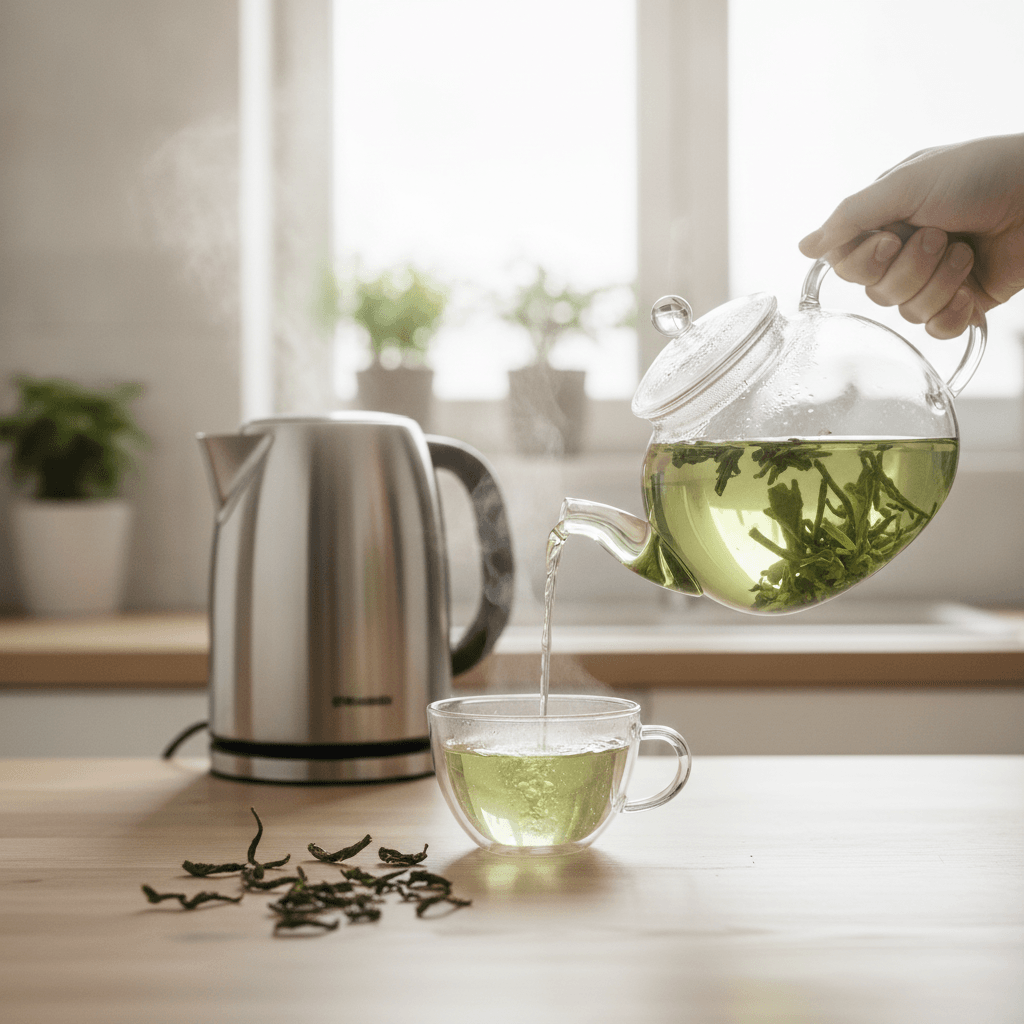
Loose leaf gives the leaves room to unfurl and releases the fullest flavour. Here is our method.
- Warm your cup with a swirl of hot water, then discard it; cold ceramic drops your water temperature instantly.
- Measure 1 teaspoon (about 2 grams) of leaves per 200 ml cup. For a whole-leaf tea like our Darjeeling Classic Green Tea, a slightly generous teaspoon is fine.
- Boil fresh water, then rest it 2 to 3 minutes to reach 80 to 85 degrees Celsius.
- Pour over the leaves, cover, and steep 2 to 3 minutes.
- Strain fully. Leaves left sitting in the cup keep extracting.
Blends with sturdy botanicals, like Lemon Ginger Green Tea or Tulsi Ginger Green Tea, can take the full 3 minutes; the herbs soften the tannin edge.
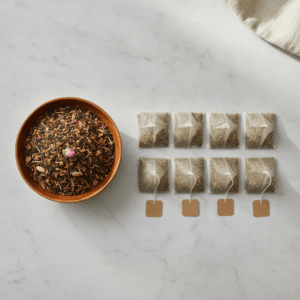
For green tea bags
Tea bags contain smaller leaf particles, which extract faster. That’s their convenience and their danger.
- Use one bag per 200 ml cup, water at the same 80 to 85 degrees Celsius.
- Steep 2 minutes for a light cup, 3 for a fuller one.
- Dip the bag gently once or twice, then let it rest. Never squeeze the bag on removal; squeezing wrings out the most tannin-heavy liquid inside.
- Take the bag out on time. A bag forgotten for 10 minutes is beyond saving.
Common mistakes: a quick checklist
- Pouring boiling water directly onto the leaves
- Steeping past 3 minutes or leaving leaves in the cup
- Squeezing the tea bag
- Using too much leaf to chase “strength”
- Adding milk, which clashes with green tea’s character
- Storing tea near spices or in sunlight, where it goes stale and dull
Water Quality: The Ingredient Nobody Thinks About
Your cup is 99 percent water, so water flaws become tea flaws. Very hard water, common in many Indian cities, mutes freshness and can leave a chalky film; heavy chlorine adds its own off-taste. Filtered or RO water works well; if RO tastes flat, mix in a little regular filtered water. And always start with freshly drawn water, since repeated boiling makes it taste dull.
Yes, You Can Re-Steep (and You Should)
Good loose leaf green tea is built for more than one round. Keep the strained leaves and brew them again with fresh 80 to 85 degree water for 3 to 4 minutes; the second cup tastes gentler and rounder, with less caffeine. Whole-leaf teas such as our Darjeeling Classic Green Tea and Moringa Ginger Green Tea comfortably give two or three steeps, improving cost per cup. Tea bags manage one decent re-steep at best.
Bonus: Iced Green Tea for Indian Summers
Brew it slightly strong, then chill. Use 2 teaspoons of leaves (or 2 bags) per 200 ml of 80 to 85 degree water, steep 3 minutes, strain, and cool before refrigerating. Pour over ice with a squeeze of lime and a few mint leaves. Lemon Ginger Green Tea is outstanding this way, bright, zesty, and far better than any bottled iced tea. Green tea has also traditionally been enjoyed as a light daily beverage that may support refreshing routines.
Frequently Asked Questions
Why does my green tea taste bitter even with good leaves?
Almost always temperature or time. Boiling water extracts tannins far faster than 80 to 85 degree water, and anything past 3 minutes lets bitterness dominate. Rest boiled water briefly before pouring, set a timer, and strain completely. If it’s still harsh, reduce your leaf to one level teaspoon per cup.
How do I get 80 to 85 degrees without a thermometer?
Boil the water, switch off the heat, and let the kettle sit uncovered for 2 to 3 minutes. Alternatively, pour boiling water into an empty cup first, then over your leaves; each pour drops the temperature roughly 5 to 10 degrees. Either way lands close enough for a clean cup.
Can I re-steep green tea leaves?
Yes, and with whole-leaf teas you should. Re-brew the same leaves with fresh 80 to 85 degree water for 3 to 4 minutes; expect a softer, rounder cup with less caffeine. Quality loose leaf gives two or three good steeps in a sitting, while tea bags manage one extra, lighter cup.
Should I add milk or sugar to green tea?
We’d skip the milk; it masks green tea’s fresh character and doesn’t pair well with its tannins. If you need sweetness while adjusting, a little honey once the tea has cooled slightly is a kinder choice. Brewed at the right temperature and time, most people find green tea needs nothing at all.
Ready to Brew a Better Cup?
Great technique deserves great leaves. Start with our Darjeeling Classic Green Tea for a pure, classic cup, or Lemon Ginger Green Tea for a zesty edge. There’s also Tulsi Ginger Green Tea for something calming, and Moringa Ginger Green Tea for an earthy twist. Free shipping over ₹499, timer not included, but now you know you need one.
Disclaimer: TeaQure teas support wellness rituals; they don’t diagnose, treat, or cure disease. Consult your doctor for medical concerns.