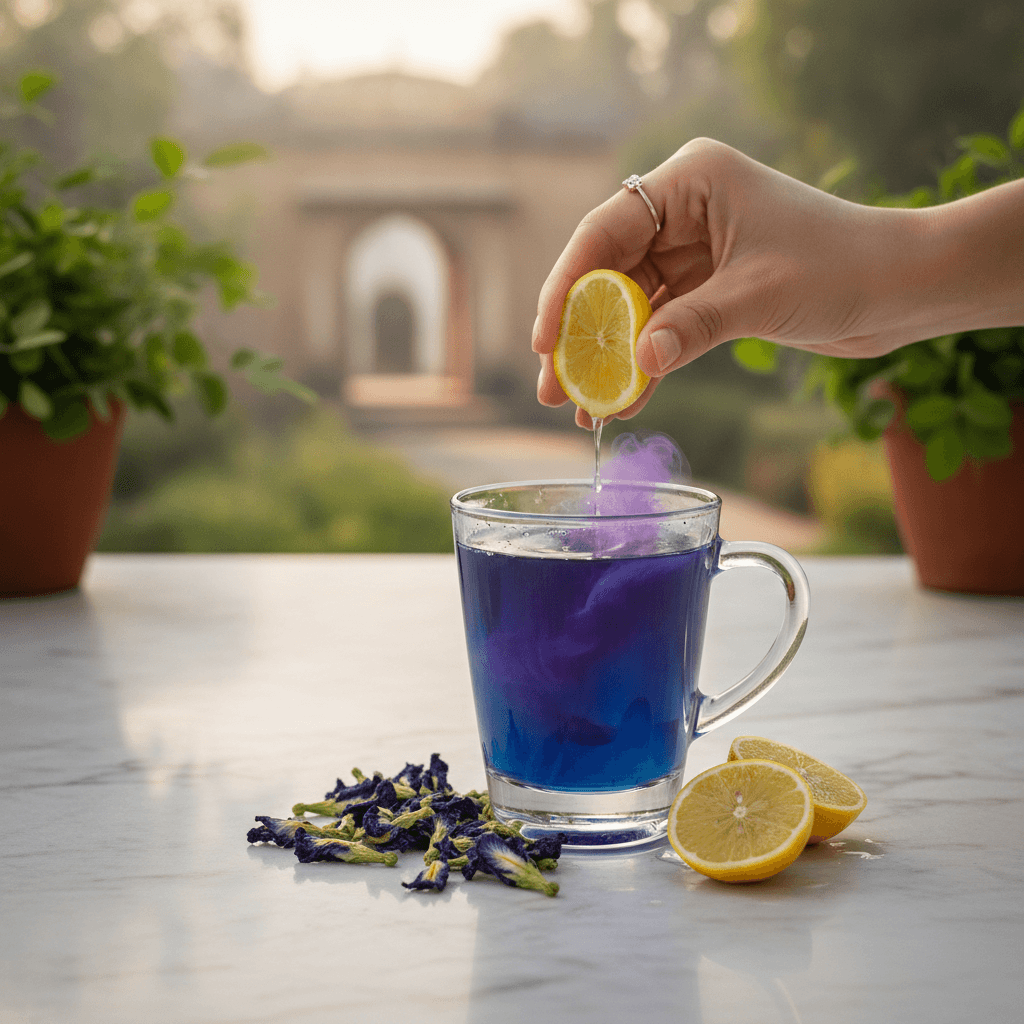
If you have scrolled through Instagram lately, you have probably seen it: a cup of tea so vividly blue it looks Photoshopped, turning purple the moment someone squeezes in a lemon. That is butterfly pea flower tea — “blue tea” to most of us — and no, there is no food colouring involved. The colour comes entirely from a small climbing flower that has grown across Indian gardens and fences for generations, known in Hindi as aparajita. Beyond the theatrics, this caffeine-free tisane has a gentle, earthy taste and a long history in traditional wellness practices across India and Southeast Asia. Here is everything worth knowing before you brew your first blue cup.
What Exactly Is Butterfly Pea Flower Tea?
Butterfly pea flower tea is a herbal tisane made from the dried petals of Clitoria ternatea, a vine native to South and Southeast Asia; in Thailand, the drink nam dok anchan has been a household staple for decades. Because the brew contains no leaves from the Camellia sinensis tea plant, it is technically not a “tea” at all — which is precisely why it is naturally, completely caffeine-free.
The flavour surprises people. Given the electric colour, you might expect something fruity or floral. Instead, blue tea tastes mild, lightly earthy and woody, a little like a gentle green tea without the grassiness or bitterness. That neutral base is what makes it such a good canvas for lemongrass, honey, mint or citrus.
The Colour-Change Chemistry: Why Lemon Turns It Purple
The blue comes from anthocyanins — the same family of plant pigments that colour blueberries, jamun and red cabbage. Butterfly pea flowers are unusually rich in a stable subtype called ternatins.
Here is the fun part: anthocyanins are pH-sensitive. They behave like a natural litmus test in your cup.
- In plain water (roughly neutral pH), the brew sits at a deep royal blue.
- Add lemon or lime juice and the acidity drops the pH, shifting the pigment to violet and then bright purple-pink.
- Add something alkaline (a hibiscus-free herbal blend with a pinch of baking soda, if you are experimenting) and it drifts towards teal-green.
This is honest kitchen chemistry, not a gimmick added at the factory — which is why the colour change is a quick authenticity check. If your blue tea does not shift with lemon, it probably is not real butterfly pea flower.
Butterfly Pea Flower Tea Benefits: What We Actually Know
We will be straight with you: blue tea is not a miracle drink, and anyone promising it will melt fat or reverse ageing is overselling. But there are genuinely good reasons it has earned a place in wellness routines.
Rich in antioxidants
Those anthocyanins are not just pretty — they are antioxidants, compounds that help the body deal with oxidative stress. Early lab and small human studies on butterfly pea extract look promising, though large clinical trials are still limited. Traditionally, the flower has been used in Ayurvedic and Thai practice to support memory, calm and general vitality.
Naturally caffeine-free
This may be blue tea’s most practical benefit. It is a warm, ritual-worthy cup you can drink at 10 pm without lying awake at midnight. For anyone cutting back on chai or coffee, it fills the “I want something in my hands” gap beautifully — and it is safe to sip several times a day.
A calming, calorie-free ritual
Many drinkers describe blue tea as their wind-down cup: soothing colour, caffeine-free warmth and a traditional association with calm. Brewed plain, it has virtually no calories and no tannic bitterness even if you over-steep — forgiving for beginners.
How to Brew Butterfly Pea Flower Tea
Hot brew
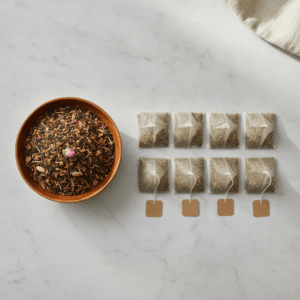
- Use 5 to 7 dried flowers (or 1 teaspoon of petals, or 1 tea bag) per cup.
- Heat water to about 90 to 95°C — just off the boil.
- Pour 200 ml over the flowers and steep 4 to 5 minutes, until the water turns deep blue.
- Strain, then drink plain, with honey, or with a squeeze of lemon for the purple magic.
Iced brew
- Steep double-strength: 10 to 12 flowers in 200 ml hot water for 5 minutes.
- Strain and cool, then pour over a tall glass of ice.
- Top with cold water, soda or lemonade.
For a slow option, cold-brew 10 flowers in 1 litre of water in the fridge for 6 to 8 hours — the result is smoother and subtly sweet.
Recipe Ideas Worth Showing Off
Colour-changing blue lemonade
Brew and chill double-strength blue tea. In a glass, mix the juice of half a lemon with 2 teaspoons of sugar or honey and ice. Pour the blue tea over slowly and watch layers of blue turn violet, then purple-pink as you stir. This one is made for guests — pour it at the table.
Blue latte
Steep 5 flowers in 60 ml hot water for 5 minutes. Warm and froth 150 ml milk (dairy or oat both work), sweeten lightly with honey, and pour the blue concentrate over the foam. Skip the lemon here — acid plus milk means curdling.
Beyond the cup
Use a strong brew to cook striking blue rice for pulao, freeze it into ice cubes that tint drinks as they melt, or shake it into mocktails with lime and mint.
Frequently Asked Questions
Does butterfly pea flower tea have caffeine?
No. Butterfly pea flower tea is a herbal tisane, not a true tea from the Camellia sinensis plant, so it is completely caffeine-free. That makes it a good choice for evenings, for people sensitive to caffeine, and for anyone trying to reduce their daily chai or coffee count without giving up a warm ritual.
Why does blue tea change colour with lemon?
The pigments in butterfly pea flowers, called anthocyanins, are sensitive to pH. In neutral water they appear deep blue; when you add acidic lemon juice, the lower pH shifts their structure and the drink turns violet to purple-pink. It is natural chemistry happening live in your glass — no colouring or additives involved.
What does butterfly pea flower tea taste like?
Milder than the colour suggests. Expect a light, earthy, faintly woody flavour, similar to a very gentle green tea, with no bitterness when brewed correctly. Because the taste is so neutral, it pairs well with honey, lemon, mint, lemongrass or ginger — which is why it stars in so many recipes.
Can I drink blue tea every day?
For most healthy adults, a cup or two daily is generally considered fine, and its caffeine-free nature makes timing flexible. If you are pregnant, nursing, on medication or managing a health condition, check with your doctor first — sensible advice for any herbal tisane you plan to drink regularly.
Ready to Pour Something Blue?
The best way to understand the fuss is to watch your own cup turn purple. TeaQure sources whole, deep-indigo butterfly pea flowers that brew a vivid, honest blue every time. If you love loose flowers and slow rituals, start with our Butterfly Pea Flower – Blue Tea. If convenience wins on weekday mornings, the Butterfly Pea Flower Tea Bags 25N give you the same colour-changing magic in under five minutes. Orders over ₹499 ship free across India — enough for a month of very photogenic evenings.
Disclaimer: TeaQure teas support wellness rituals; they don’t diagnose, treat, or cure disease. Consult your doctor for medical concerns.